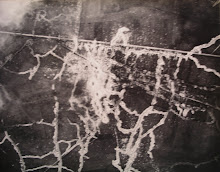
Here are some poems I wrote while writing my book Willow / Wilg / Weide / Saule (Ypres Willows):
Willows Poems
Shock of Recognition, Pilckem Ridge
Blood-dark, stark against the sky
are war’s images we carry from photograph’s still grain,
the film’s foolery of the eye, a painting’s pigment,
the landscape sweep of panoramas . . .
Their shapes jolt vision, shake sense, dislocate;
these fields were, are.
Tree-fans of high explosive smoke erupt from fields
where willow rods now claim the sky.
Spring’s lanyard jerks at the breech,
a green fuze triggers spurting sap’s gaine;
willow fingers start their splaying trajectory.
We are in the killing zone, once quick with death’s dawn timetable,
its tide marks of cartographic plots:
the field guns’ creeping and standing barrages,
the machine gun barrage,
the bombardment by trench mortars,
by medium and heavy artillery.
Here men flounder over fractured earth,
through nets of wire,
through air roaringly reticulated;
flayed by a burning sleet of lead,
scouring shrapnel balls’ fiery hail,
a steel scourge of splinters.
Napoleon’s Fifth Element, Passchendaele
Earth, rooted;
Air, breathing and dancing;
Fire, all around;
Water, the life blood;
Mud.
The Line of March, Messines
Static sentinels,
or stalking figures, up the track, along the hedge;
then in open order,
shaking out into line
or artillery formation.
Unharvested,
their rods
explode into the sky.
Ancient Pollards, Ploegsteert
(‘Old willow boles, rarely sound and falling about untidily,
continue to shoot vigorously’)
Spiky, hoary polls -
shock-headed,
gnarl-faced,
whorled,
limbless;
the old sweats, who once fired
fifteen rounds rapid.
Rotting, raddled corpses,
And survivors, old wounds healed
around shell splinters, steel rods, concrete,
screw pickets, wire barbs.
White Willows, Cross Roads Farm
Some white willows are weeping,
their lashes stroking the moat’s breast,
dropping tears.
Bat and Ball; drawing a blank
The backs of the leaves flicker white in the wind
as a ghost, or an angel, passes;
the felled tree’s flesh glimmers with the pallor of a shroud.
Sawn straight from it, the undressed white willow slab, square cut,
like the round which will not kill
is called a blank (not ball).
Reading the Runes, St Yvon
How to read the brown hare,
lored with wicca and moon,
breaking in February’s sunshine over the plough,
along no man’s land, from the trees around the flooded mine crater,
from the wired brushwood by the concrete pillbox sherds?
Trees as text
or as signs, symbols;
conventional signs on the map –
the dots penning the flowing beke,
shoring the still dyke or pool?
Read their linearity, their punctuation,
their studding, their scatter in the landscape.
What information do they yield, these willow patterns?
Some deep, ancient pattern of cultivation, of mulch and tilth,
of gabion, wattle and revetment against the rushing water,
the drilling rain, crumbling bank.
That here Flemish farmers fought the rheumy clay
to work their root crops and pastures,
seed their land,
plant their rods, harvest the osier crop
along the ditch, around the teeming pool and moat.
They line the cultivation, mark the gutter,
form field boundaries, divide lush pasture from clay plough.
Or that here was a battle
leaving a hecatomb of corpses?
The Quick and the Dead
(with acknowledgements to Robert Graves)
A tree of enchantment,
the moon’s willow is the fifth tree,
one of the seven wise pillars, with their planets, days and letters,
one of the seven noble, sacred, trees of the grove.
Its branches waving at the fifth month
start May Day’s orgiastic revels, spring magic dew,
urge the season of the renewed sun.
Helicë, the willow sacred to poets,
names Helicon, home of the Nine Muses,
wanton priestesses of the Moon-goddess.
Mount Helicon’s willow fairy, Heliconian the Muse (the White Goddess),
waves her willow-wand,
starts the wind whispering inspiration in the willows,
puts poets’ minds under a strange and potent influence.
Mystically eloquent, Orpheus received his gift
by touching willows in Persephone’s grove;
outside the Dictean Cave the Orphic willow grew.
Water-loving willow, goddess of wells and springs;
witches went to sea in willow basket-sieves, sailed in riddles,
the liknos, used for winnowing corn, telling the future.
Poseidon, to whom a Helicean Grove was sacred,
led the Muses, guarded the Delphic Oracle, before Apollo.
Belili, Sumerian White Goddess, was a willow-goddess of wells and springs.
Beli, her divinatory son, a Sea-god, tutelary deity of Britain - his ‘honey-isle’.
A god must commands its waters –
the grey Narrow Seas, green Western Approaches, blue High Seas –
before he can rule an island.
Weep, willow, for your lost lover;
wear green willows in your hat as a sign;
and as a charm against the jealousy
of the Moon-goddess.
White Moon-wood, dove, barn owl;
Willow’s landscape is the terrain of death, of the White Goddess,
whose prime orgiastic bird – the wryneck, snake-bird, cuckoo’s mate,
spring migrant hissing like a snake,
nests in willows.
Europë on coins from Cretan Gortyna,
sits in a willow tree, osier basket in hand, made love to by an eagle;
is Eur-ope, of the broad face, the Full Moon,
and Eu-rope, of the flourishing withies, Helice, sister of Amalthea.
The ancient word for willow
yields witch, wicked, wicca, wicker;
at Fricourt, by no strange transposition,
Wicket Corner became Wicked Corner.
Druids offer human sacrifice
in wicker baskets
at the full moon.
Rods sprout from willows’ polls, make baskets ensnaring the moon.
Flints knapped to willow-leaves,
inscribed with crescent moons,
are funery.
Willow is sacred to Hecate, Circe, Hera and Persephone,
the Triple Moon-goddess’s witch-worshipped death faces;
so you haven’t got a chance, boys, in the willow landscape.
Willow service
Trussed with rust-barbed wire,
they stand
as fence posts,
supports for notice boards,
field boundaries;
revet the stream banks,
yield rods, poles, firewood,
nests for birds,
lashed cross-branches skied crows’ nests,
cross-trees for storks, kites;
hiding places for children in their crowns,
for owls in their hollow skulls,
a little shelter against rain’s lashing,
shade for picnics and lovers.
Friday, 15 May 2009
Secauspion Road
I'm posting this here because my web search for Secauspion Road turned up zero web pages - a most unusual event these days! Secauspion Road was a plank road constructed across the shell-wrecked swampland of the Ypres Salient during the Third Battle of Ypres (1917). I believe the name is a composite, derived from SECond AUStralian PIONeers. Does anyone have any confirmation, or any alternative ideas?
This was one of the fascinating trench and topographical names I discovered while scouring trench maps, divisional and regimental histories, war diaries and other sources, for my book Rats Alley - Trench Names of the Western Front (2006).
Thursday, 7 May 2009
1914-1918 Photogrammetry and Aerial Photography
A recent book, in which I have a paper on British, French and German photogrammetry in the First World War, resulting from the University of Ghent Ghent air photo conference is:
Images of Conflict: Military Aerial Photography & Archaeology, Edited by
Birger Stichelbaut, Jean Bourgeois, Nicholas Saunders, Piet Chielens.
Cambridge Scholars Publishing, 2009. ISBN (10): 1-4438-0171-2, ISBN (13):
978-1-4438-0171-3.
Images of Conflict: Military Aerial Photography & Archaeology, Edited by
Birger Stichelbaut, Jean Bourgeois, Nicholas Saunders, Piet Chielens.
Cambridge Scholars Publishing, 2009. ISBN (10): 1-4438-0171-2, ISBN (13):
978-1-4438-0171-3.
Saturday, 2 May 2009
Trench Names in A S Byatt's new novel The Children's Book
Antonia (A.S.) Byatt has not only read my Rats Alley book about trench names, but has used it (and acknowledged it) in her research for her new novel The Children's Book, published by Chatto & Windus. She also has one of her characters write a poem about these names - this poem was also published recently in the New Yorker. Her book will be launched in London in mid-May, and she will be speaking at the Charleston Festival on Sunday 17th May at 2.30pm.
Labels:
A S Byatt,
The Children's Book,
trench names,
Ypres Willows
Wednesday, 1 April 2009
Imaging Golgotha; Oxford 28th February 2009
Oxford 28-2-09: additional note.
Imaging Golgotha – Aerial Photos and Trench Maps of the Western Front. Dr Peter Chasseaud
Why do we need the Western Front landscape? A mythical landscape.
We must recognise that we are all involved in the process of creating a new mythology. As Nietzsche said, history is all about interpretation. There is, of course, a myriad of interpretations.
I am today looking at the creation, during the First World War, of a conceptual and representational paper landscape which has now, for us, become a simulacrum of the ‘real’ conflict landscape of 1914-18. We recognise that landscape is a human construction, the result of thousands of years of cultivation and industry. The war landscape has the humans all mixed up in it (literally), and walking all over it. Those of us who today walk the same geographical landscape, in the full knowledge that the 14-18 war, and the intervening years, have changed that landscape, also have to acknowledge that the past is a foreign country which we do not want to let go – indeed in some way we need to hang on to it, reclaim it or redefine it, as a way of defining our own identity. It also represents, as something we did not do, a continual challenge, a sort of perpetual St Crispin’s Day: ‘What did you do in the Great War, Daddy?’ becomes for us ‘What would you have done in the Great War . . . ?, or as one speaker I recently heard put I, ‘I hope I would cut the mustard’. There is here also an element of ancestor worship, a quasi religious element. For some it has become a dubious emotional catalyst – notably on the ‘big days’ such as 1st July, 31st July, 11th November.
We are creating this myth as part of the continuum of myth-making that was going on since August 1914, and which we can recognise in the memoirs of Graves, Sassoon, Blunden and many others, and especially in the works of David Jones. It was Jones above all who, in the period 1932-7, during the creation of In Parenthesis, consciously and explicitly designated the Western Front (and, more locally, Plugstreet) as Broceliande – the enchanted forest or mythical landscape. Across no man’s land was the strange, alien territory of the enemy, where things look and smell different, where shadows flit and ghosts and vampires lurk.
We need that mythology in a way that France or Germany do not. They were fighting for national survival, and their predominantly peasant populations were not (until briefly with Hitler and Pétain) that interested in the creation of a new mythical landscape; in any case they had their heads and hands full of the old one. But for Britain it was foreign and strange, and especially for the mainly urban, industrial civilian soldiers it was a revelation, indeed an epiphany of a sort. And from the 1960s, as we lost an empire, we needed something new to believe in, and that was some defining myth which touched every family more deeply that the more recent war of 1939-45 (around which myths were also created – Dunkirk, the Battle of Britain, the Blitz, etc., but because it more directly impacted the civilian population at home somehow diffused the experience).
Imaging Golgotha – Aerial Photos and Trench Maps of the Western Front. Dr Peter Chasseaud
Why do we need the Western Front landscape? A mythical landscape.
We must recognise that we are all involved in the process of creating a new mythology. As Nietzsche said, history is all about interpretation. There is, of course, a myriad of interpretations.
I am today looking at the creation, during the First World War, of a conceptual and representational paper landscape which has now, for us, become a simulacrum of the ‘real’ conflict landscape of 1914-18. We recognise that landscape is a human construction, the result of thousands of years of cultivation and industry. The war landscape has the humans all mixed up in it (literally), and walking all over it. Those of us who today walk the same geographical landscape, in the full knowledge that the 14-18 war, and the intervening years, have changed that landscape, also have to acknowledge that the past is a foreign country which we do not want to let go – indeed in some way we need to hang on to it, reclaim it or redefine it, as a way of defining our own identity. It also represents, as something we did not do, a continual challenge, a sort of perpetual St Crispin’s Day: ‘What did you do in the Great War, Daddy?’ becomes for us ‘What would you have done in the Great War . . . ?, or as one speaker I recently heard put I, ‘I hope I would cut the mustard’. There is here also an element of ancestor worship, a quasi religious element. For some it has become a dubious emotional catalyst – notably on the ‘big days’ such as 1st July, 31st July, 11th November.
We are creating this myth as part of the continuum of myth-making that was going on since August 1914, and which we can recognise in the memoirs of Graves, Sassoon, Blunden and many others, and especially in the works of David Jones. It was Jones above all who, in the period 1932-7, during the creation of In Parenthesis, consciously and explicitly designated the Western Front (and, more locally, Plugstreet) as Broceliande – the enchanted forest or mythical landscape. Across no man’s land was the strange, alien territory of the enemy, where things look and smell different, where shadows flit and ghosts and vampires lurk.
We need that mythology in a way that France or Germany do not. They were fighting for national survival, and their predominantly peasant populations were not (until briefly with Hitler and Pétain) that interested in the creation of a new mythical landscape; in any case they had their heads and hands full of the old one. But for Britain it was foreign and strange, and especially for the mainly urban, industrial civilian soldiers it was a revelation, indeed an epiphany of a sort. And from the 1960s, as we lost an empire, we needed something new to believe in, and that was some defining myth which touched every family more deeply that the more recent war of 1939-45 (around which myths were also created – Dunkirk, the Battle of Britain, the Blitz, etc., but because it more directly impacted the civilian population at home somehow diffused the experience).
Tuesday, 12 August 2008
Factory Farm (Ultra Trench) and Ultimo Crater (Ultimo Trench) 1915
This British summer 1915 air photo shows the German front position east of St Yvon (St Yves) at Factory Farm (bottom) and a few hundred yards to the north. This position was known to the British from late 1916 as Ultra Trench (south of the road) and Ultimo Trench (north of the road). British mines were blown on 7 June 1917 under Factory Farm, a medieval moated farm known to the French and Belgians as Reebrouck ('brouck' meaning marsh), and to the Germans as Wasser-Gut (meaning water estate), and at Ultimo Trench just north of the road.Static and dynamic interpretation.
Static interpretation reads the image as a single text - it draws out what is there, looking for characteristic signatures. In the photo above we can see a medieval and early modern cultivation system, roads and farm tracks, and a typical medieval moated farm, overlain by a relatively simple German trench and breastwork front system, with communication trenches running to the rear. The direction of light and season are given by the shadows of the trees, which are in full leaf. This photo was taken in the evening, with the low sunlight coming from the north-west. The light striking the front edge of the parapets and paradoses of trenches and breastworks, and catching the smooth, reflecting surfaces of bare earth and sandbags, contrasted with the deep shadows thrown by these features, throws them into strong relief.
Note the bulging and thickened sections of breastwork where the Germans have started building concrete shelters for their front-line garrison (particularly machine-gun crews) into and under the parapet. These were at roughly 50-metre intervals. Machine-gun positions were sited to fire along no-man's land, to take an attack in enfilade. They were not generally sited to fire to the front; this would have made their loopholes too conspicuous, and in any case was less effective in terms of a deadly field of fire.
Possible trench mortar positions can also be seen behind the German front line. We can also make out the dark band of barbed wire to the west of the German front breastwork.
A small sandbag redoubt has been built in the front line where it crosses the road.
The fall away of the ground south of the road is indicated by the shadow thrown; the level of Factory Farm is significantly below that of the St Yvon Ridge north of the road. This may explain the old name of Factory Farm - Reebrouck - 'brouck' meaning marsh.
At Factory Farm the German breastworks have been integrated with the ruins of the old farm buildings, giving a typical rectangular pattern. Tree shadows in the farm area show that it has, as yet, been relatively little bombarded, an indicator of the lack of British heavy artillery, mortars and ammunition at this stage of the war. Note how few shell holes can be seen in the whole area covered by the photo.
At the extreme left (west) of the photo is the British front line (Trench 123), a much less considerable example of field engineering, where it runs east road running northward from Le Gheer and Le Pelerin (the Birdcage). The British front line cuts back to the west (north end of Trench 123) at the highest point of the St Yvon ridge, which runs downhill from west to east towards Warneton and the River Lys.
Dynamic interpretation is much more fruitful, as it interrogates a series of images covering the same site taken at intervals of time, and draws its conclusions from the changes, or developments, between each of the series of images.
With hindsight we know that, from mid-1915, the Germans were building concrete machine-gun positions and personnel shelters (MEBUs) into their front line; these were often called pill-boxes by the British, and more recently called bunkers (a word not much used by the British in the First World War). German practice in an Allied attack was for the machine gun crews, with their machine guns and ammunition, to shelter from the preliminary artillery bombardment in these shelters (or in deep dugouts where the geology permitted), only to emerge when the bombardment had lifted. Sentries left out in the front line trench would give warning of this, and the crews would rush out and set up their machine guns in nearby shell-holes or remaining sections of trench.
1914-18 aerial photographs of the Factory Farm area reveal a rural landscape undergoing transformation under the impact of war. On the earliest surviving British (June-July 1915) air photos can be seen the pattern of roads, woods, farms, drainage ditches, cultivation boundaries, etc., and the lush vegetation of the season. The bare surfaces of roads and tracks, usually meeting at distinct angles or right-angles, show up white. Railways form long straights and gentle curves, punctuated by level crossings and/or bridges. Knowledge of the direction of light is important for differentiating between mounds and hollows; this can be deduced from shadows thrown by trees, etc. The length of shadows, related to the time of day and the season of the year, can give the height of objects. Low sunlight catches the rims of craters and shell-holes facing the sun, and casts shadows on their far side. Long, full shadows reveal hedges and the types of trees around farms and along roads and ditches – pollard willows, poplars, etc. Ground forms and features such as ditches, breastworks, banks and sunken roads are thrown into sharp relief by the raking early morning, late afternoon or evening light. Stereoscopic pairs (stereograms) make the detail stand out even more clearly, and are a great aid to interpretation.
Trenches are clearly shown as zig-zagging dark lines where they are in deep shadow, while the bare earth or sandbags forming parapet and parados, reflecting more light, show up as a pale tone or even as white. Great breastworks, built up above ground level to keep the floor of the trench above the water table, are thrown into relief by raking light and their massive dimensions made apparent (6-8 feet high, parapet some 20 feet thick, parados less thick. A thin line indicates an elbow rest, a broader line the firestep, of a fire-trench. Support and reserve trenches, splinter-proof dugouts, mortar positions and latrines can also be made out, though the last three are difficult to interpret. Machine gun positions, low in the German parapet, can be identified by the thin dark slit of their firing aperture at the foot of the parapet, by a V-shaped depression in the parapet, and by their tactically-sited position to obtain the best, usually oblique or enfilade, field of fire. Typically they were sited to fire along no man’s land, particularly where small salients or re-entrants made this possible. Where the front lines changed direction, or formed a distinct bend or dog’s leg, the machine guns were again sited to take advantage of the possibilities of enfilade fire. Barbed wire obstacles and entanglements show as dark bands in front of the fire-trenches.
Farm building and houses are easy to identify by their shape and context. Roofs catch the light. If the roofs have disappeared, the internal wall structure shows them subdivided into rectangular cells. Moated farms (hence the German name for Factory Farm: Wasser-Gut) show up clearly as a building or cluster of buildings inside a circular or rectangular water feature. Depending on the angle of light, the water in moat, pond or shell-hole can appear dark or light. After much rain, water-filled depressions can appear darker than the surrounding ground. When the snow is on the ground, the features show up black against the white ground; much more can be seen on snow photos, particularly occupied shell-holes, tracks, blast-marks, wire.
NB:
Dynamic interpretation is vital; a sequencve of images of the same site over time.
Inter-relationship of sources and images.
The air photo and terrestrial panorama photo inform the reading of the map.
The map informs the reading of the photos.
The reading of the landscape on the ground informs the reading of the map and the photos.
The map and photos inform the reading of the landscape on the ground
Everything informs everything else; symbiosis and serendipity.
Monday, 21 July 2008
New Project; Landscape, Aerial Photography and Mapping 1914-1918
One of my landscape projects at present is working on the relationship between landscape, aerial photography and mapping in the First World War, and will be posting some of the results on this blog. My earlier books (Topography of Armageddon, Artillery's Astrologers, Rats Alley) have looked at this relationship, but my new study is taking a deeper look at aspects such as phenomenology and photogrammetry.
Subscribe to:
Posts (Atom)